"Mini." "Lite." "Skinny." "Snack size." The words are engineered to sound harmless, like a little treat that couldn't possibly count. But the word on the front of the bag has nothing to do with what the food does inside you. Bad things come in small caloric packaging.
The whole point of a "mini" label is to make you feel like you're getting away with something. It shrinks the guilt, not the glycemic load. And because the portion looks so innocent, you reach in a second time, and a third, and the "mini" quietly becomes a mountain. The label did its job. Your blood sugar paid for it.
A Real Example: Mini Donuts
Take a bag of frosted mini donuts. The whole bag is 3.25 oz (92 g). Tiny. Cute. "Mini." Nothing about the packaging warns you off, and the little size makes it feel like a rounding error on your day.
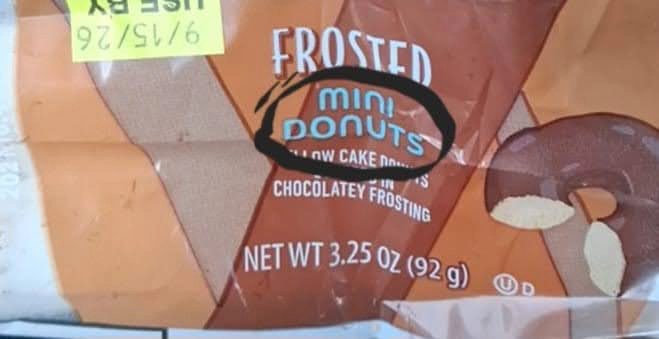
"Mini" shrinks the word on the bag, not what happens after you eat it.
Now scan it. Lower6 Next reads the whole bag at a glycemic index of 76 with 15 grams of sugar. That's a red-light, high-GI food, and "mini" did nothing to change it. A word on the front of a package can't lower a number your body is going to feel anyway.
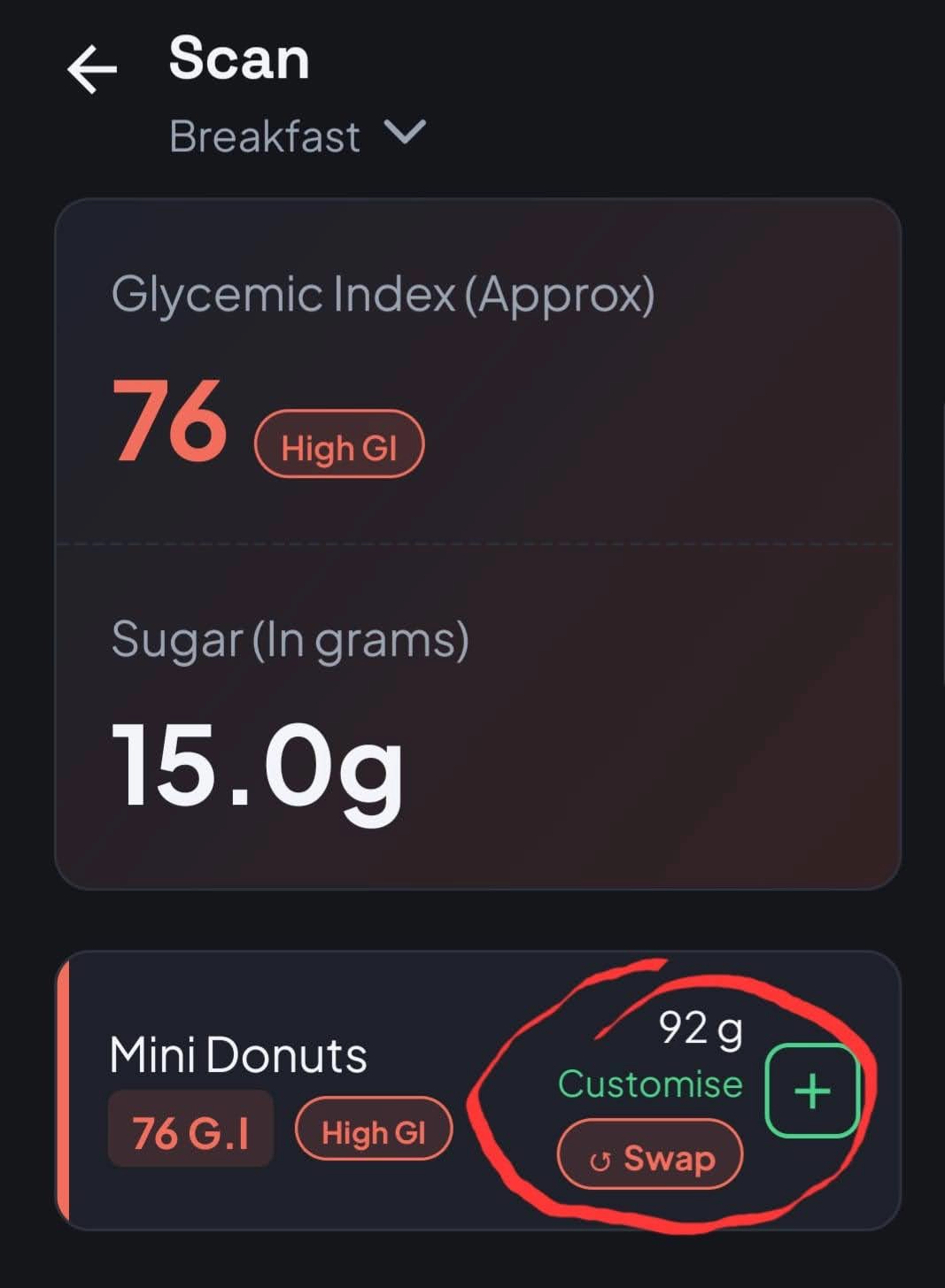
GI 76, 15 g of sugar, and a Swap button. The number doesn't read the label; it reads the food.
Why the Little Word Works On You
"Mini" isn't describing the food. It's managing your permission. A regular donut you'd think twice about; a mini donut you eat six of without noticing, because each one feels like it doesn't count. That's the trap: the label lowers your guard and raises your total. You end up eating more sugar than you would have from the full-size version you'd have respected.
The same trick hides behind "lite," "low-fat," "all natural," and "made with real fruit." These are marketing terms, not glycemic ones. You can't count on any of them to tell you what a food does to your blood sugar, because that was never their job.
What To Actually Do: Swap, Don't Study
You don't need to become a food-label detective. You need one habit: when a food lights up red, swap it. That's the whole move. A high-GI mini donut becomes a bowl of Greek yogurt and berries, and the spike you were about to have simply never happens. One swap changes the curve; a thousand label terms change nothing.
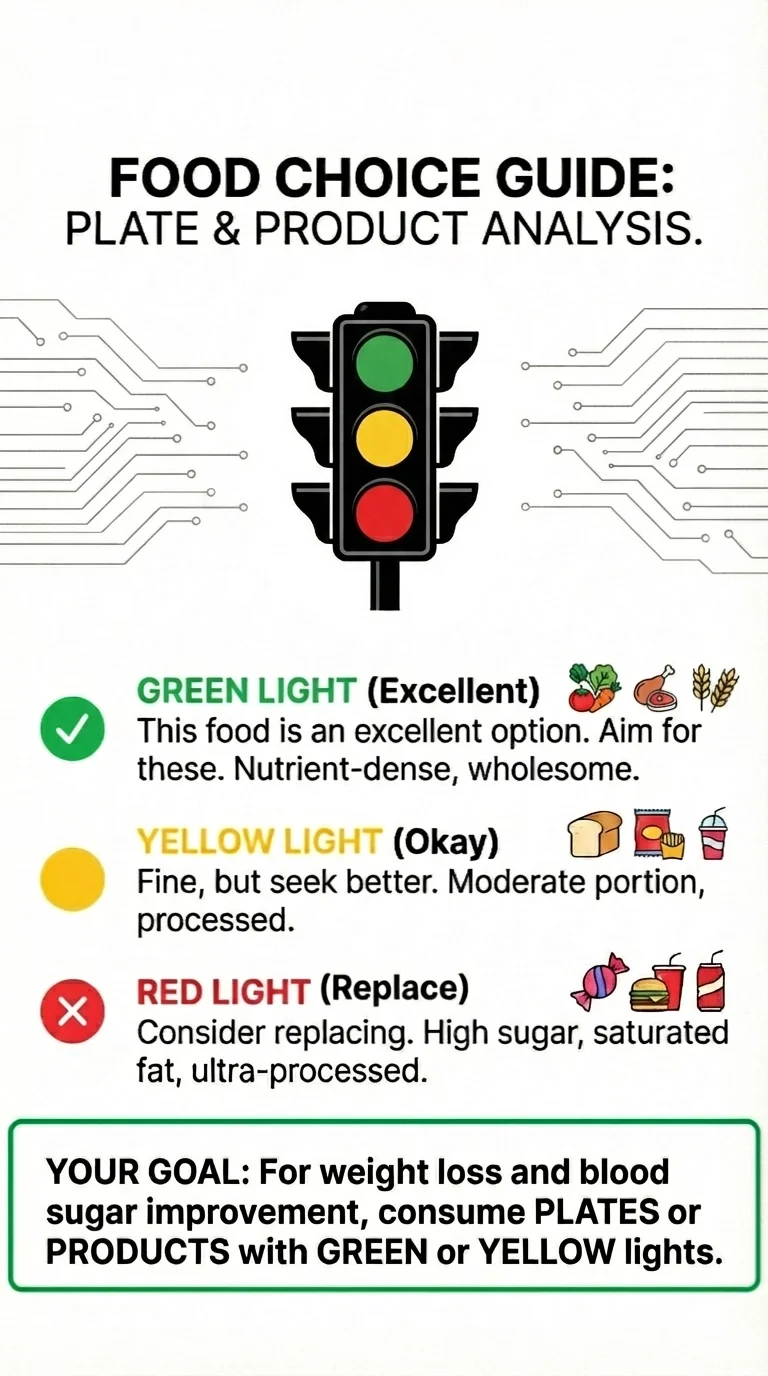
Green, aim for it. Yellow, fine in moderation. Red, swap it. That's the entire system.
That's exactly why we built Lower6 Next. Snap a photo of the plate or the package and it gives you the glycemic index and sugar for the food as a whole, then offers a Swap right there on the screen. The invisible number that "mini" was hiding finally shows up before you eat, and a better option is one tap away.
"Mini" is a word. A swap is a decision. When you're trying to lose weight, one SWAP is worth more than a thousand food-label terms.
Stop Reading Labels. Start Making Swaps.
Lower6 Next scans your food, shows its glycemic index and sugar, and hands you a better swap in seconds, on Android or Apple.
Download the App