Put two "healthy" plates side by side and they can look almost identical. One keeps your blood sugar flat and steady. The other sends it up like a rocket. From across the table, you'd never know which is which.
That's the frustrating part about eating for stable glucose: the thing that matters most is invisible. It isn't the calories, and it isn't how green the plate looks. It's how fast the food turns into sugar in your blood, and that depends on the whole meal, not any single ingredient.
A Real Example: The Chicken Bowl
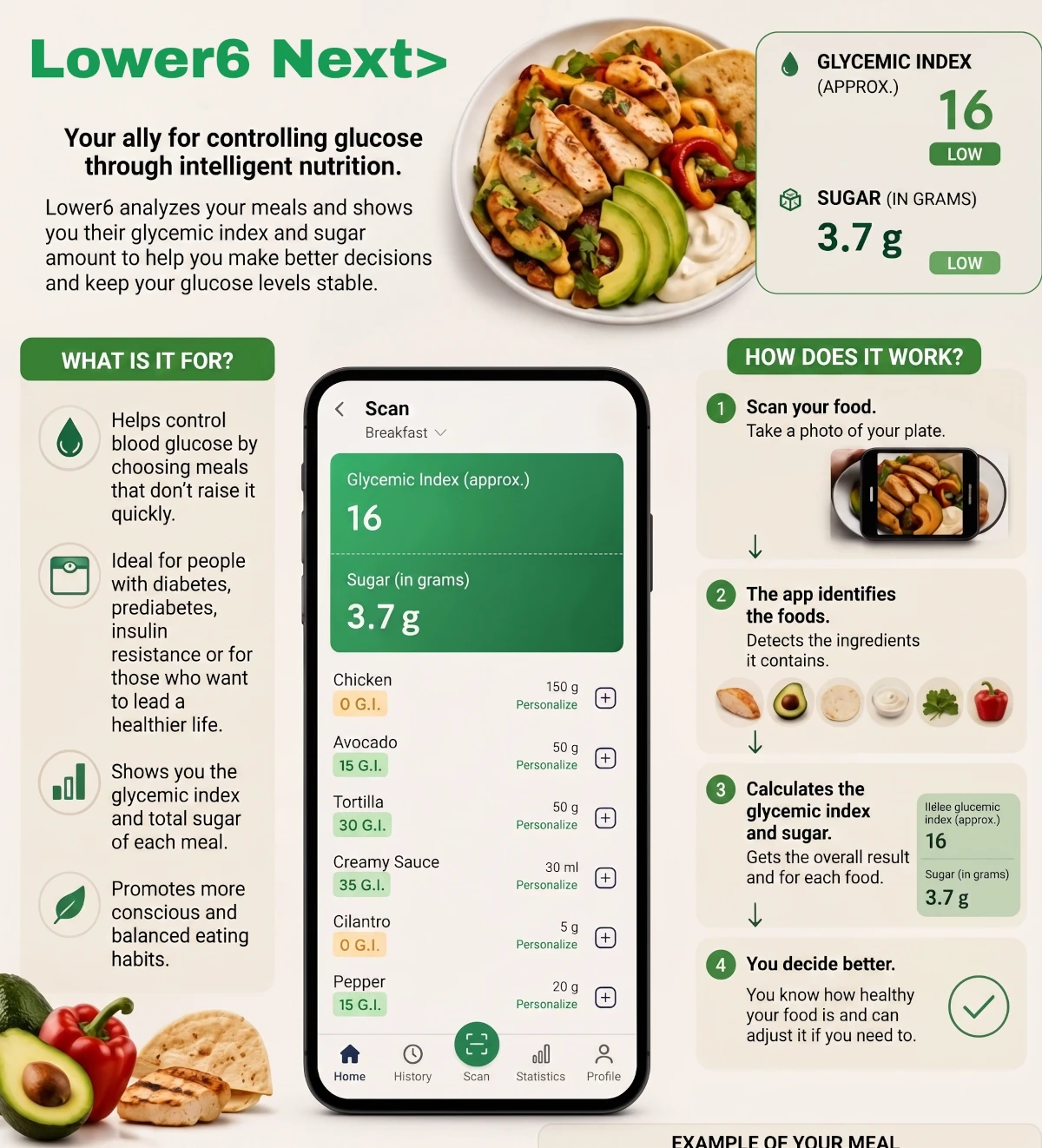
Take a grilled chicken bowl with chicken, avocado, a tortilla, a little creamy sauce, peppers, and cilantro. It looks indulgent. You'd assume the tortilla alone would spike you. But run the whole plate together and it lands at a glycemic index of about 16. That's low. Really low.
Why? Because the tortilla never shows up alone. It arrives with fat from the avocado and sauce, protein from the chicken, and fiber from the vegetables. Those three things slow everything down; your stomach empties more gradually, the carbs trickle in instead of flooding, and the spike gets flattened before it starts.
Fat, protein, and fiber on the same plate turn a "carby" meal into a slow, steady one.
Now the Twist
Here's what trips people up. A meal that looks lighter can spike you harder. A plain bagel with jam, a bowl of cereal with skim milk, a smoothie made of nothing but fruit; these read as "healthy" and "not much food." But they're mostly fast carbs with little fat, protein, or fiber to slow them down. The result is a sharp rise and, an hour or two later, the crash: hungry again, foggy, reaching for a snack.
So the fuller-looking chicken bowl treats your body better than the tidy little smoothie. You cannot eyeball this. The plate that looks disciplined is often the one working against you.
What To Actually Do About It
You don't need to memorize the glycemic index of every food. You just need to stop letting carbs travel alone. Pair the bagel with eggs. Add nuts or Greek yogurt to the fruit. Put the rice next to protein and vegetables instead of on its own. That single habit flattens most of the spikes people don't even realize they're having.

Same carbs, different company, and a completely different curve.
The catch is still that invisibility problem: you're making these calls without any real feedback. That's the whole reason we built Lower6 Next; snap a photo of your plate and it estimates the glycemic index and sugar for the meal as a whole, so the thing that used to be invisible finally has a number on it. Green light, you're good. Red light, adjust before you eat.
Two plates can look the same and do the opposite. Now you know what to look for, and how to check.
See Your Plate Before You Eat It
Lower6 Next scans your meal and shows its glycemic index and sugar in seconds, on Android or Apple.
Download the App